Silver Spring, MD
Garage Door Opener Repair for Silver Spring Homes
Opener stopped working on a house built in the 1960s or 70s? We repair garage door openers across Silver Spring and the surrounding neighborhoods, fast and done right.
The Symptom
You hit the button and nothing happens, or the motor hums but the door won't budge, or it opens halfway and reverses for no reason.
Remote works, opener stalls
Sometimes it's the remote - batteries fine, but the opener just stopped listening. Other times the door starts moving and then stalls, straining against something you can't see from inside the garage. Most of these calls aren't actually about the opener itself.
Opener reacts to resistance
The opener is a motor turning a chain or belt, and it's built to sense resistance and stop rather than fight it. So when a cable is fraying, a roller is seized, or a spring has lost tension, the opener does exactly what it's supposed to do: it quits.
Symptoms mislead the diagnosis
That's why guessing at the fix from the symptom alone is a bad bet. A opener that 'won't open' could need a logic board, a new drive gear, or it could need nothing done to the opener at all - the real problem is downstream.
What the Fix Involves
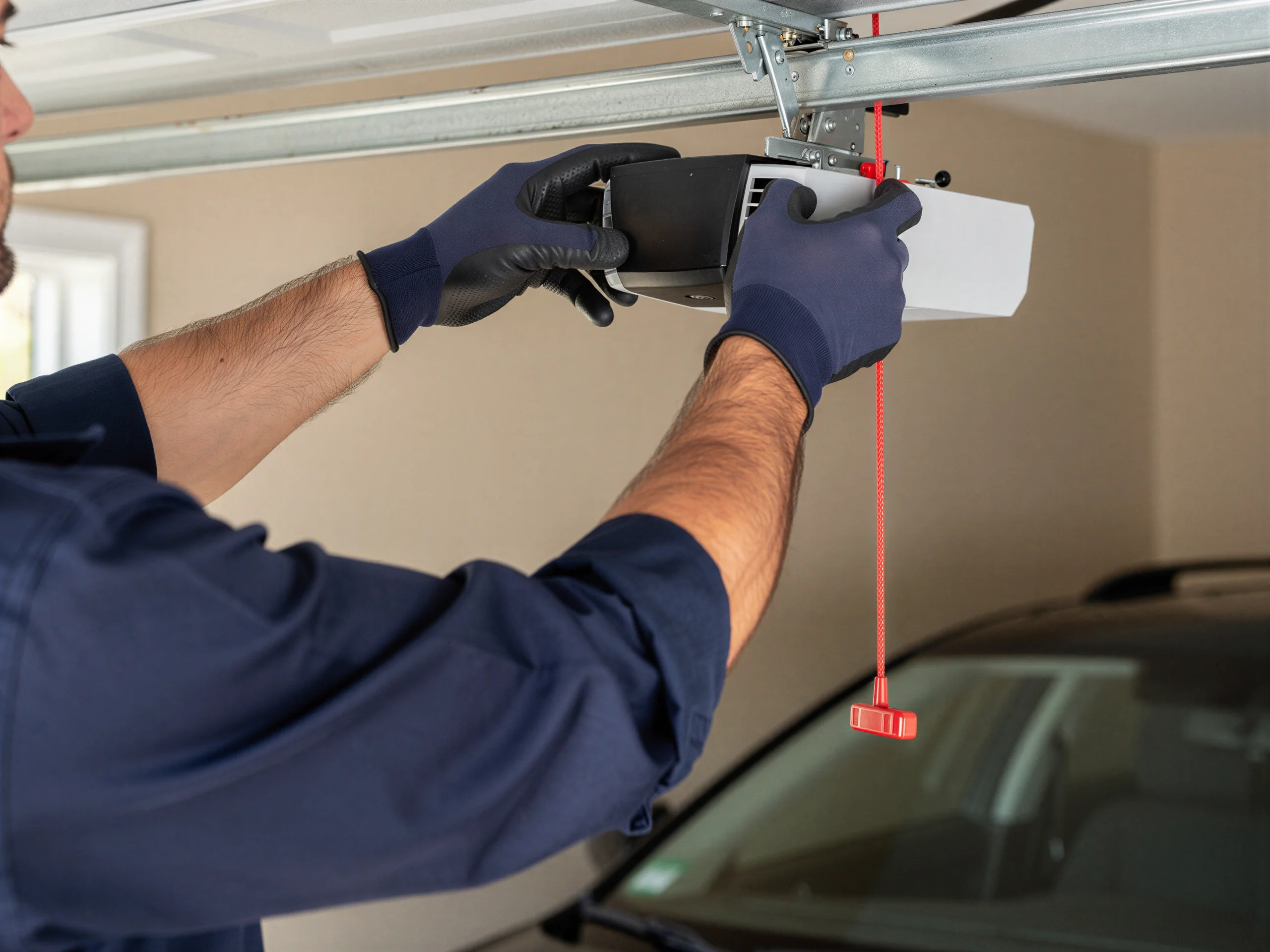
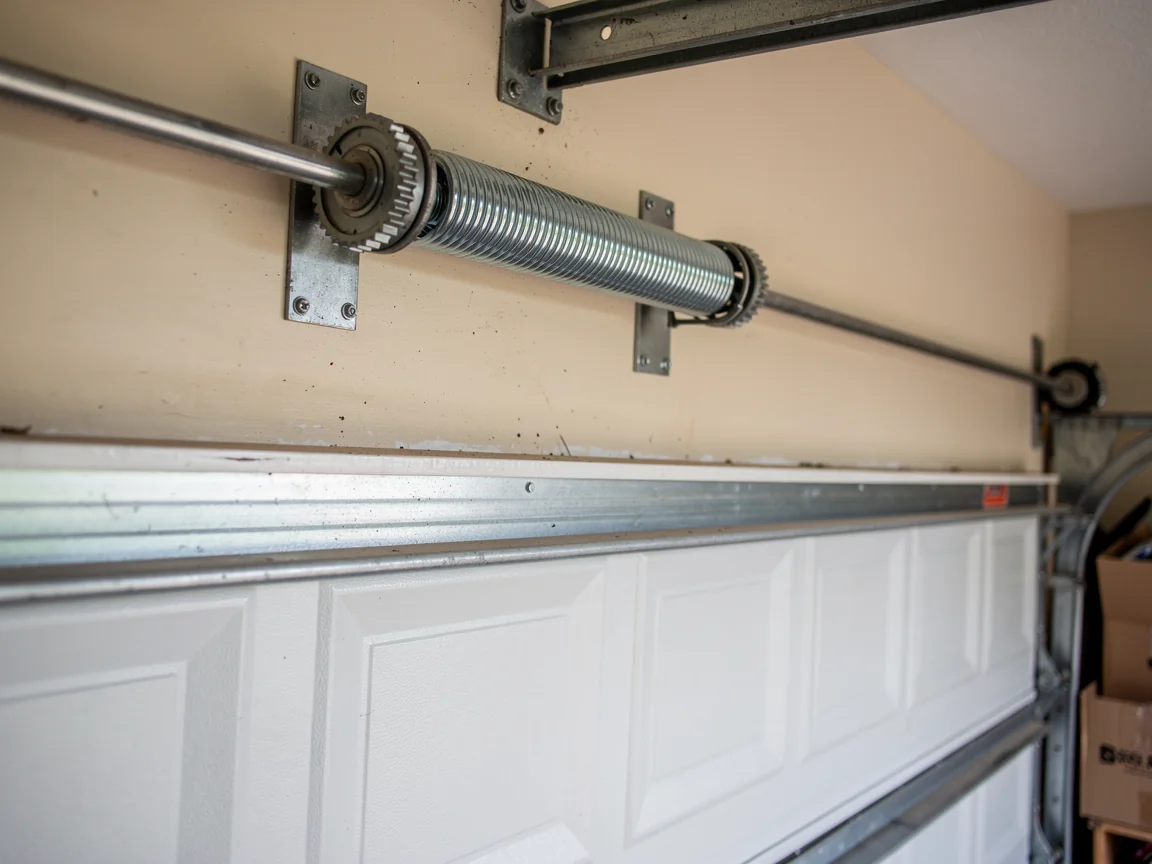
First step is figuring out whether the opener is the patient or just the messenger. We check the travel limits, test the safety sensors (a dirty or knocked-out-of-alignment eye will stop a door cold and mimic an opener failure), and pull the manual release to see how the door moves on its own. If the door is heavy or binds by hand, the opener isn't the problem - the spring or hardware is, and that's a different repair.
If the opener itself is at fault, the common repairs are a stripped drive gear (plastic gear inside the unit wears out over years of use), a failed capacitor or circuit board, a worn chain or belt that's slipping instead of pulling, or dead-end wiring from a sensor. We carry parts for the belt and chain-drive openers that show up most often in this area's housing stock - older homes sometimes still run openers from a prior renovation that don't match current safety-sensor standards, and in those cases replacement is usually the honest answer over a patch repair.
How Long You Are Without the Door
A straightforward opener repair - gear, sensor, logic board swap - is usually a single visit, done while we're there.
Parts sourcing delays repairs
If the opener itself needs full replacement, that's also typically same-visit work once we've confirmed the unit and mounting match your garage. Where it stretches out is parts. Older opener models, the kind still running in houses built decades ago, sometimes use discontinued boards or housings.
Full unit replacement option
If your opener is one of those, we'll tell you straight that sourcing the exact part could take longer than the repair itself, and that replacing the whole unit may be faster and not much more expensive than waiting on a special-order board.
What Causes It Around Here
Housing in this service area runs mostly from the late 1940s through the 2010s, with the bulk of it dating to the 1960s and 70s. That matters for openers in a specific way: a lot of these garages still have original or first-generation replacement openers, units never built with the rolling-code security or auto-reverse sensors that are now standard. When those older units finally fail, the fix usually isn't a part - it's a full replacement, because manufacturers stopped stocking boards for openers that old years ago.
Climate plays its part too. This area sits in a cold, severe winter band, and an unheated garage puts real stress on an opener's motor and gearing every winter - cold grease thickens, plastic gears get brittle, and a unit that's been limping along in summer often finally quits once temperatures drop. Combine 1960s-era wiring and mounting hardware with a hard winter and you get the two most common opener calls we see: gear failure and sensor misalignment from a door and frame that have shifted slightly over fifty-plus years.
Questions
Common questions
Why did my garage door opener suddenly stop working with no warning?
Usually it's not sudden - it's the last step of slow wear. A drive gear strips gradually, a sensor drifts out of alignment a little at a time, or a chain stretches until it finally slips. The opener often just reaches the point where it can't compensate anymore and stops cold.
Is it cheaper to repair my opener or replace it?
Depends on the part and the age of the unit. If it's a sensor or a common drive gear, repair is usually the better call. If the opener is an older model without current safety sensors, replacement often makes more sense since matching boards for discontinued units can be hard to find.
Can cold weather really break a garage door opener?
Yes. In an unheated garage, cold thickens the grease in the gearing and makes plastic drive gears more brittle, so an opener already worn from years of use is more likely to fail in winter than in warmer months.
My door opens by hand but the opener won't move it - what does that mean?
That points to the opener, not the door hardware. If the door moves smoothly on manual release, the spring and cables are doing their job, and the problem is inside the opener unit itself - likely the gear, motor, or circuit board.
Explore more
Explore More Services In Silver Spring, MD
When Your Silver Spring Garage Door Won't Budge
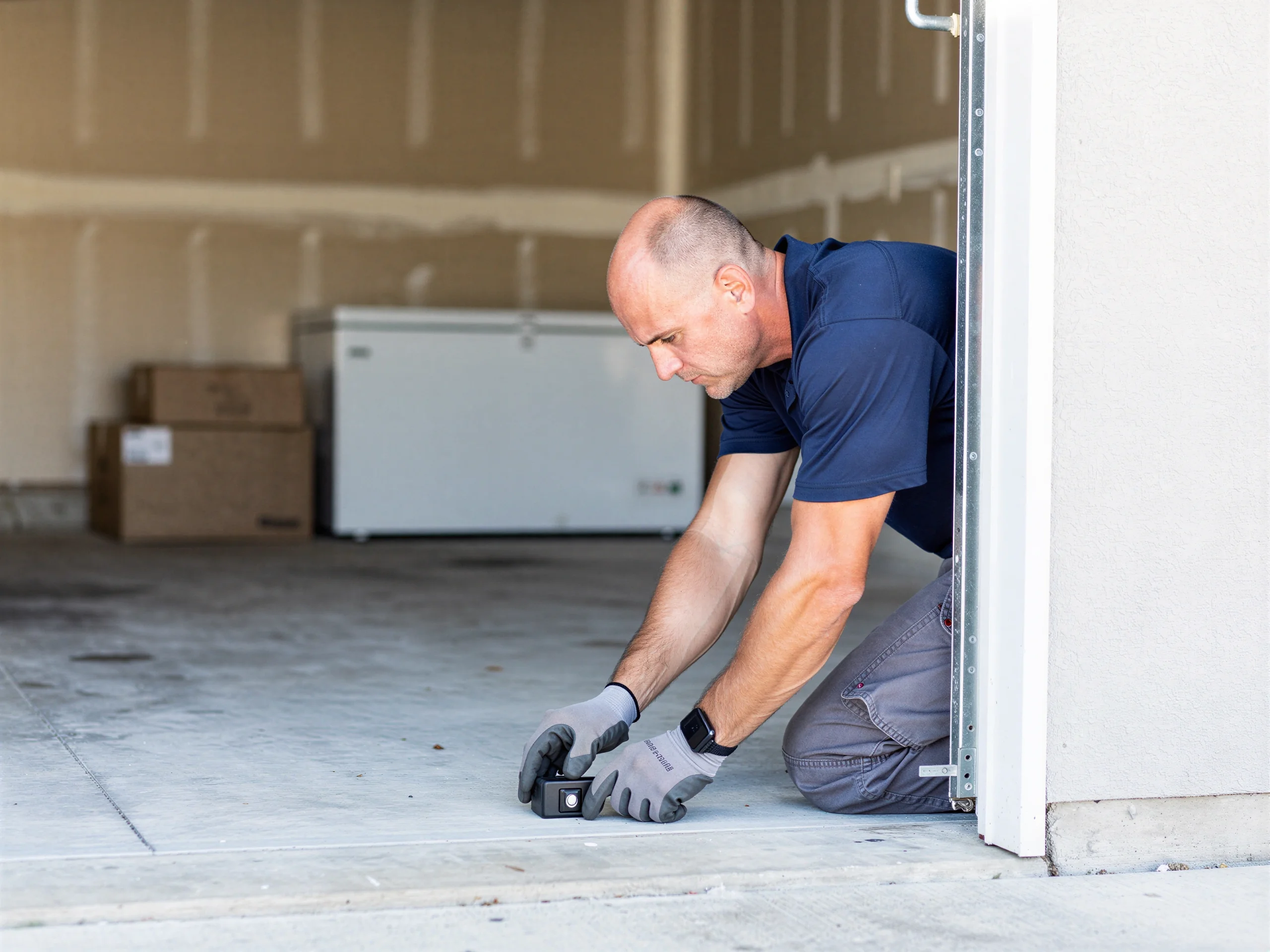
Torsion spring snapped or door stuck on track in Silver Spring? Learn more →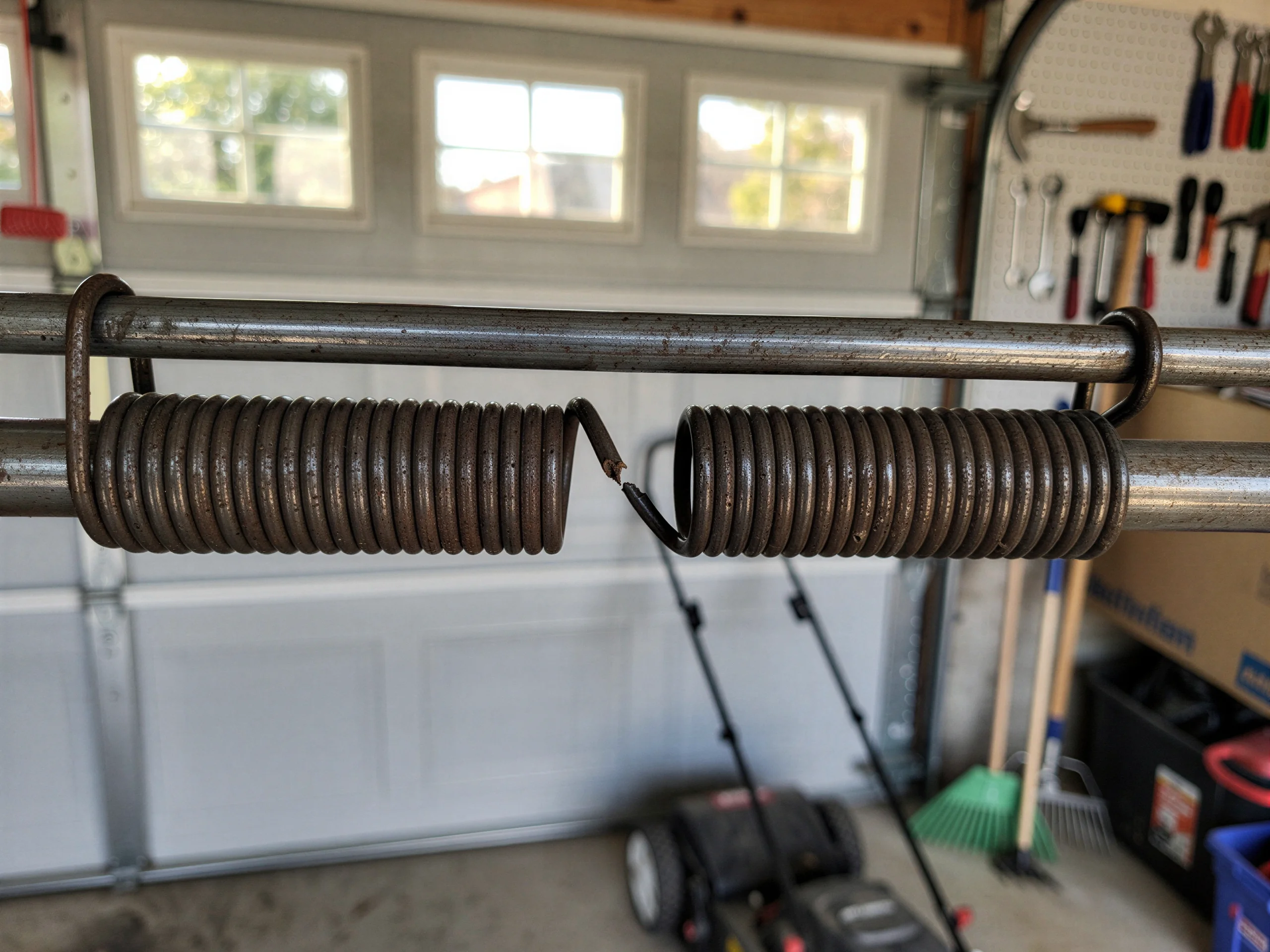
Garage Door Spring Repair Across the Silver Spring Service Area
Broken torsion or extension spring on a Silver Spring area house? Learn more →
Keep Your Silver Spring Garage Door Running Through Another Cold Winter
Garage door maintenance in Silver Spring, MD: spring, track, and opener tune-ups built for homes dating to 1948-2014 and a severe-cold winter climate. Learn more →
Garage Door Off Track? Here's What's Actually Wrong
Garage door jumped its track in Silver Spring? Learn more →
New Garage Door Installation for Silver Spring Homes
Replacing an original door from Silver Spring's 1960s-70s housing stock? Learn more →
Garage Door Repair in Silver Spring, MD
Broken spring, stuck door, dead opener? Learn more →Ready when you are
Garage door opener acting up in Silver Spring?
Silver Spring Garage Door Pros repairs and installs garage doors, springs and openers in Silver Spring, MD and the surrounding area.