
Noises That Mean Something: A Silver Spring Homeowner's Guide
Silver Spring homes mostly date to the 1960s-70s, and cold-climate freeze-thaw cycles wear original hardware fast.
Read moreMost Silver Spring garage doors date to the 1960s-70s building boom. Here's what that era's hardware does in a cold, humid climate, and how to stop the draughts.
Local detail
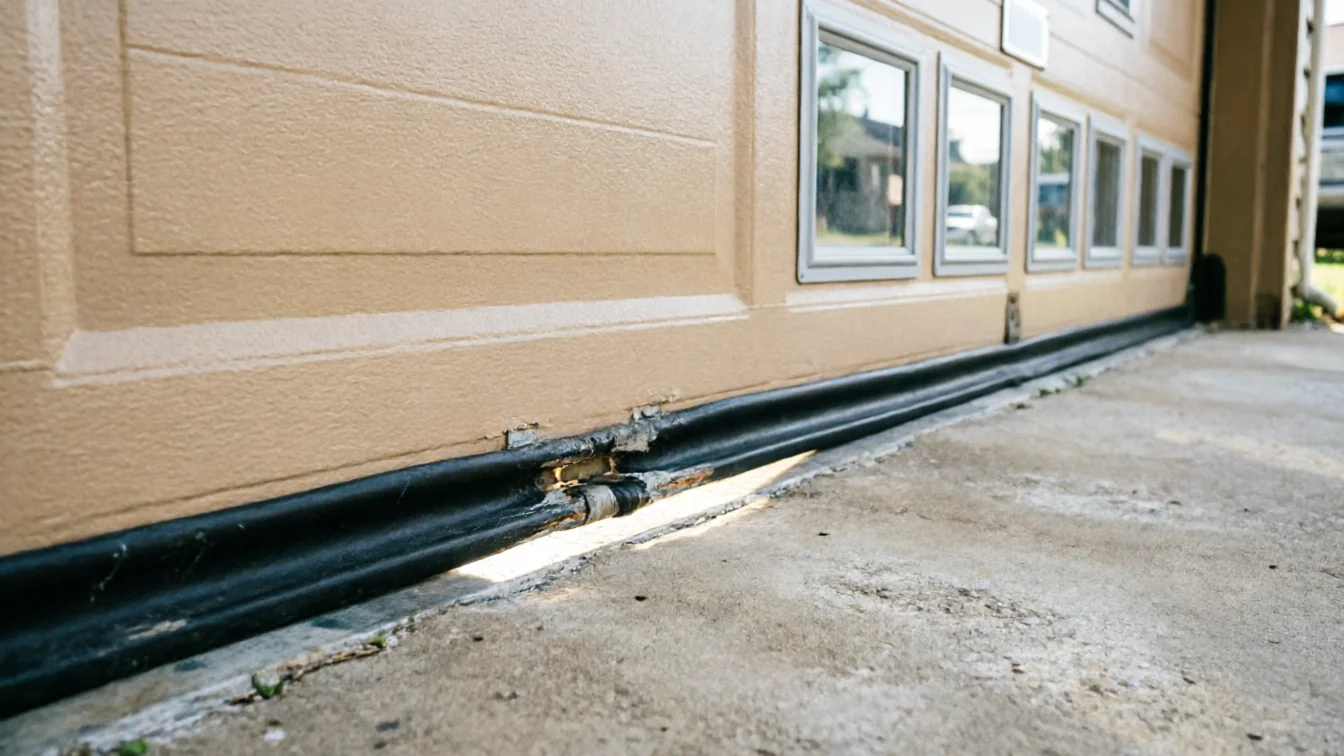
Silver Spring sits in a cold-severe climate band, which means the garage door seal on your house isn't dealing with one hard freeze a year - it's cycling through freeze-thaw swings all winter, plus humid summers that swell wood jambs and shrink them back down again. Houses here were mostly built between 1948 and 2014, with the bulk of the stock going up in the 1960s and 70s across the 81 named areas that make up this part of the county. That matters because the bottom astragal seal and the vinyl side-stops specified for a door in 1968 were never rated for 50-plus years of that cycling. The rubber hardens, cracks at the corners, and pulls away from the track - and once it does, cold air finds the gap at the bottom corners first, then along the sides where the stop has bowed outward. You'll notice it as a cold stripe across the garage floor near the door, or frost forming on the inside of the panel on the coldest mornings. That's not a door failure. It's 60-year-old weatherstripping doing exactly what rubber that age does.
The area
Start at the bottom. On a house from the 1960s-70s stock common around here, the floor seal is usually a U-shaped vinyl strip in a track, and it's the first thing to go brittle. Push a finger along it - if it cracks or flakes instead of flexing, it's done. Next, check the side stop where the door meets the jamb; on original framing from that era the jamb itself has often shifted slightly over the decades, leaving a gap you can see daylight through even with new weatherstripping installed. Third, look at the top seal where the door meets the header - this one gets ignored because it's out of eye line, but it takes the same freeze-thaw punishment. Last, run a hand along the panel joints themselves on steel doors from this period; the foam core bonded to 1970s steel sometimes separated from the skin, and that gap pulls heat straight through the panel, not just around the edges. None of this requires tools, just fifteen minutes and good light.
What we find
The real issue isn't any single seal - it's that a door built or installed during the 1960s-70s wave wasn't designed around today's weatherstripping products, so even a fresh strip of vinyl doesn't always seat the way it should against an older track or a jamb that's settled with the house. We can replace the astragal and side stop on most doors from that era without touching the panel, and that solves the bulk of the draught for most owners. What we won't do is promise a bottom seal fix will stop a cold floor entirely on a door with a separated foam core - that's a panel or full-door conversation, not a weatherstripping one, and we'll tell you which one you're looking at before we quote anything. Given the household income levels typical across this service area, most owners here are better served by an honest seal-versus-replace call up front than by a repeat visit six months later.
How we work
Fall is the window to deal with this, before the cold-severe winter sets in - check seals in October and you'll beat the first hard freeze that makes old vinyl brittle enough to crack on contact. Winter is when you'll feel the problem but it's the worst time to do a full side-stop realignment, since cold vinyl doesn't seat well and cracks further during the work itself. Spring brings the thaw and, on houses from the 1960s-70s stock, often some jamb movement from ground heave over the winter - that's when gaps that weren't there in fall suddenly show up. Summer humidity swells wood-framed openings and can actually close small gaps temporarily, which is why some owners think the problem fixed itself - it didn't, it'll be back by November. If you're going to do one seal job a year on a door from this era, early fall is the right call.
Questions
Vinyl weatherstripping hardens and cracks in cold-severe climates like Silver Spring's, so gaps that are invisible in summer heat open up once temperatures drop. If your house dates to the 1960s-70s building wave common in this area, the original-spec seals are well past their service life and that's usually the whole story.
On most doors from this era, yes - the bottom astragal sits in a track and pulls out. The harder part is getting a true fit against a jamb that's shifted over 50-plus years, which is where a lot of DIY jobs still leave a gap at the corners.
If the draught is a thin line at the bottom or sides, it's almost always the weatherstripping. If you feel cold coming through the flat part of a steel panel itself, that's a separated foam core, common in doors from the 1960s-70s stock, and no amount of new seal will fix it.
Recommendation
More garage door guides for Silver Spring homeowners.
Silver Spring homes mostly date to the 1960s-70s, and cold-climate freeze-thaw cycles wear original hardware fast.
Read more
Most Silver Spring houses date to the 1960s and 70s, with original hardware still on many.
Read more
Silver Spring homes built 1948-2014 face cold winters and aging torsion hardware.
Read moreReady when you are
Silver Spring Garage Door Pros repairs and installs garage doors, springs and openers in Silver Spring, MD and the surrounding area.