
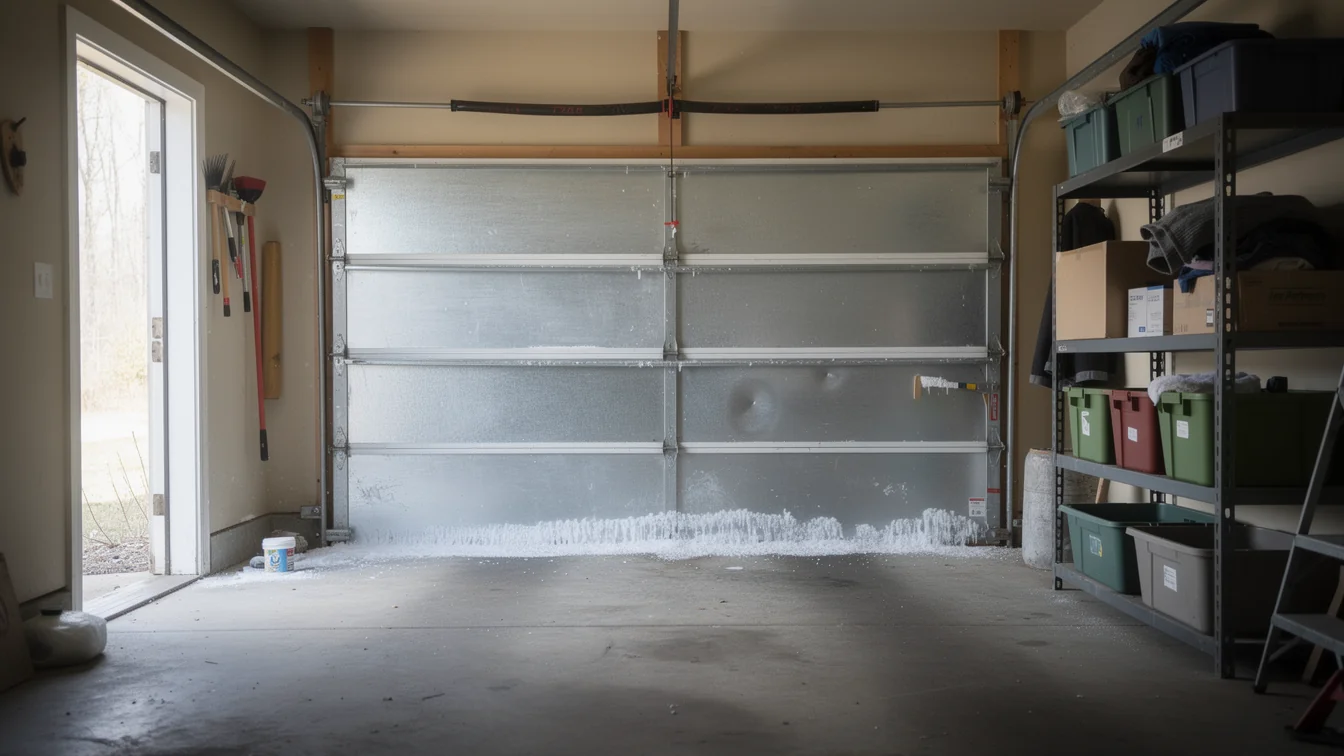
What Silver Spring's Climate and Housing Age Do to a Garage Door
Silver Spring's garage doors mostly date to the 1960s and 70s, built before current insulation rules, and our severe cold winters find every gap and worn spring in them.
Read moreSilver Spring's garage doors mostly date to the 1960s and 70s, built before current cold-climate codes. Here's how to know when repair stops making sense.
Local detail
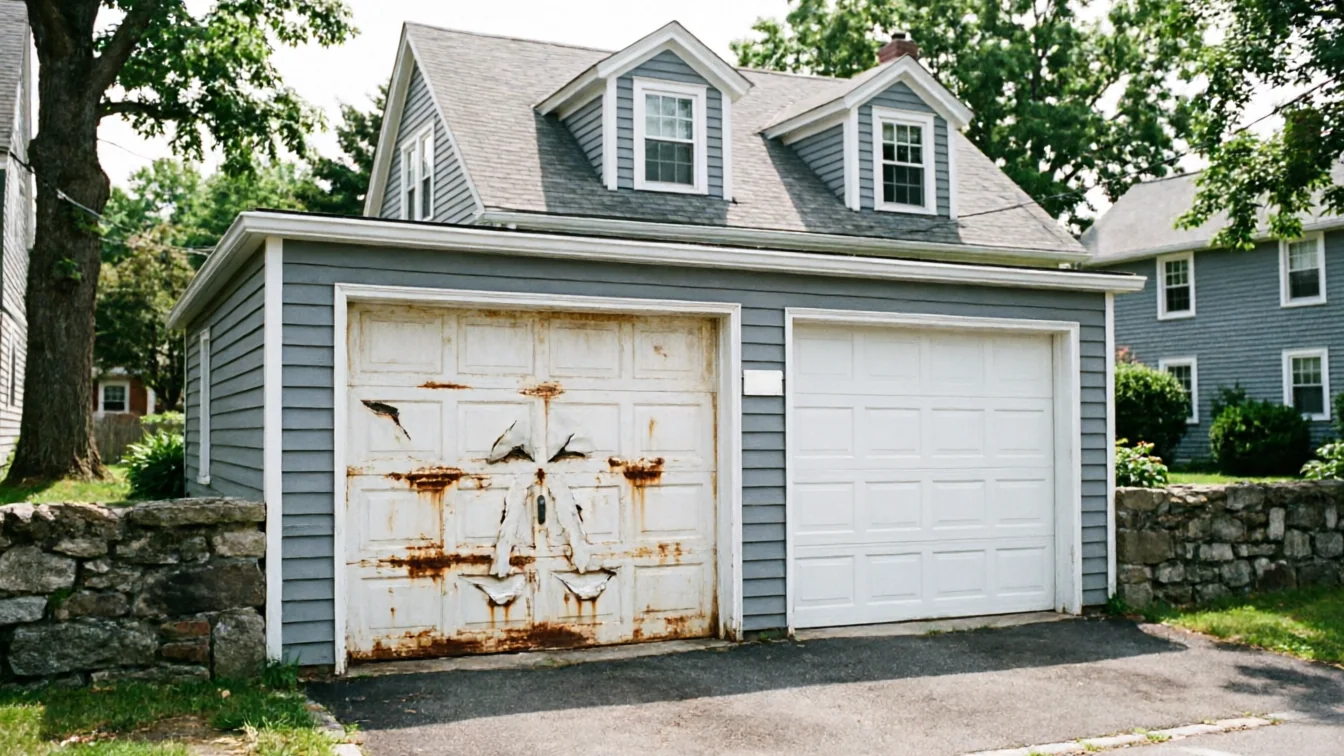
Silver Spring sits in a climate band federal data classifies as cold and severe, and that matters more for a garage door than almost any other part of a house. Cold snaps shrink steel and tighten torsion springs past their rated cycle count faster than they would in a milder zone. Most of the housing stock in this service area went up between 1948 and 2014, with the median landing around 1976, so a large share of the doors out there are original equipment from an era before insulated steel sections and sealed bottom brackets were standard. A door built to a 1970s spec wasn't engineered with today's weatherstripping or thermal breaks. Over enough winters, the freeze-thaw cycle works on every seam: wood panels swell and split, steel panels rust from the inside at the bottom corners, and tracks that were bolted true decades ago work loose as the house itself settles. None of this is dramatic on any single cold morning. It shows up as a slow accumulation of small failures that eventually outpaces what a spot repair can fix.
The area
Start with the spring. If it's visibly rusted, has a gap wider than a finger's width where it's supposed to be coiled tight, or the door feels noticeably heavier than it used to, that's wear, not a fluke. Next, look at the panels themselves, especially if the house is older stock from the 1960s or 70s common across this area: wood doors rot first at the bottom panel where snowmelt sits, and steel doors rust from the same spot outward. Check the track for daylight gaps between the rollers and the rail, which usually means the frame has shifted rather than just the hardware wearing out. Listen to the opener. A motor straining harder in January than it did in October is doing extra work against cold-stiffened springs and hardened weatherstripping, and that strain shortens its life. Last, check how many separate repairs this door has needed in the past couple of years. One fix is maintenance. Three fixes on the same door inside two years is a pattern, not bad luck.
What we find
Here's the part that catches people off guard: fixing one component on a decades-old door often just moves the failure point to the next weakest part. Put a new spring on a frame that's racked slightly out of square after 50 years of settling, and the spring wears unevenly and fails again sooner than it should. This is especially common on the 1960s-70s stock that makes up the bulk of housing across this area's 81 named neighborhoods - the track hardware and drum sizing from that era aren't always what current replacement parts are built to match, so a repair sometimes means adapting new parts to an old frame rather than a clean swap. We'll be straight about the limitation here: for doors built before the 1980s, some original track hardware isn't something we keep on the truck, and sourcing an exact match can mean a wait. At some point the honest advice is to stop patching a frame that's fighting every new part you put on it and replace the unit as a whole.
How we work
Late fall is when to look hardest at weatherstripping and hinges, before the first hard freeze stiffens the rubber and makes small cracks worse. Winter is spring-failure season - the cold band this area sits in means metal fatigue shows up fastest when temperatures swing, and a torsion spring near the end of its life is most likely to let go on the coldest mornings rather than the mild ones. Spring thaw is when rot and rust reveal themselves, especially on wood panels that held moisture all winter. By summer, heat expansion can bind a door that was already slightly out of alignment, and opener motors that struggled through winter cold often show their wear now too. For a door built decades ago, this cycle repeats every year with a little more damage each time. Watching for the signs each season is the only way to catch the point where another repair stops being worth it.
Questions
If your house falls in the older end of the 1948-2014 range common across this area, and nobody's mentioned replacing the spring, there's a real chance it's original or close to it. Torsion springs are rated by cycle count, not years, so a spring from a 1970s build has likely outlived its rated life regardless of appearance.
This area sits in a climate band classified as cold and severe, and cold tightens steel and stiffens lubricant and weatherstripping all at once. A spring or roller that's marginal in October often fails outright during a hard cold snap, because the metal has less give left in it.
Sometimes, if the rest of the door and the track are sound. But on a door old enough to be original to a 1960s or 70s build, a single rotted or rusted panel is often a sign the rest of the door is at a similar point. Matching an old panel color and profile can also be harder than it sounds.
We won't put a new spring on a frame that's visibly racked or chase hardware for an obsolete track system indefinitely. Past a certain point, adapting new parts to a 50-year-old frame costs more in labor and callbacks than a clean replacement, and we'll tell you when we hit that point.
Recommendation
More garage door guides for Silver Spring homeowners.
Silver Spring's garage doors mostly date to the 1960s and 70s, built before current insulation rules, and our severe cold winters find every gap and worn spring in them.
Read more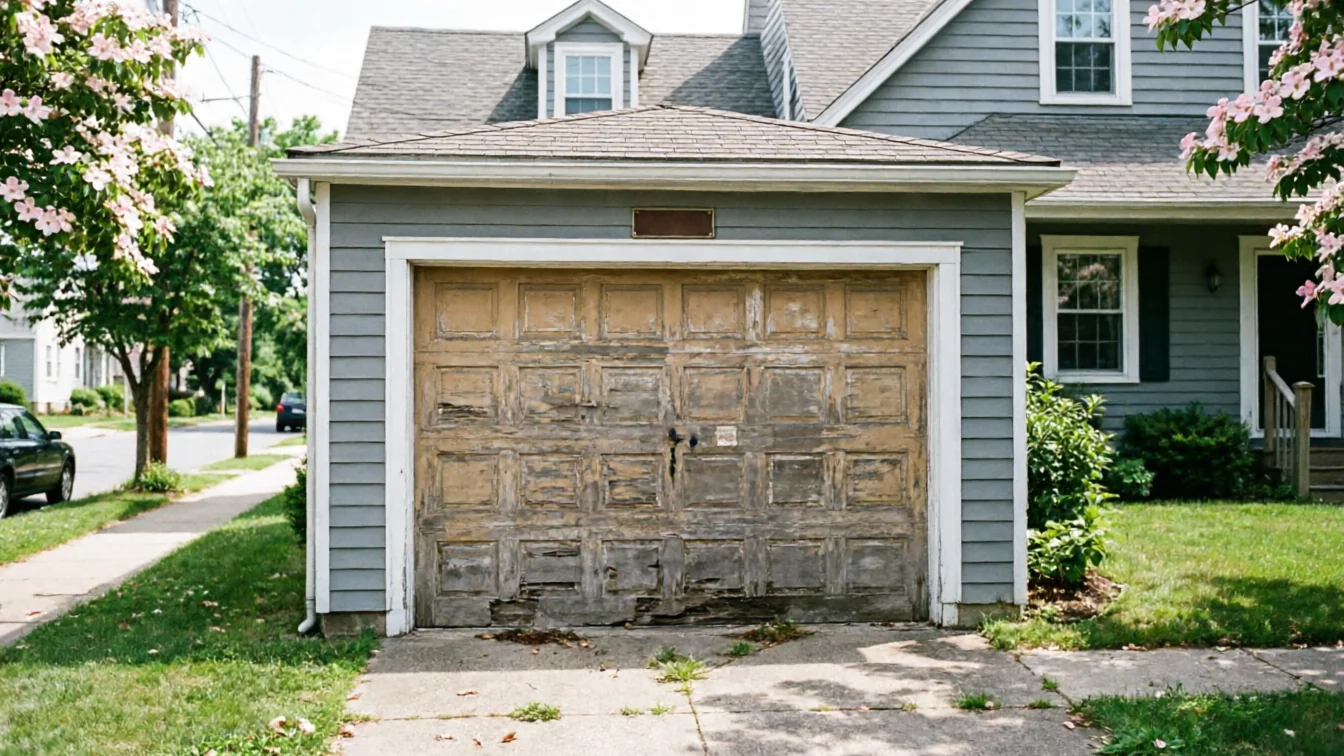
Silver Spring homes mostly date 1948-2014, median 1976.
Read more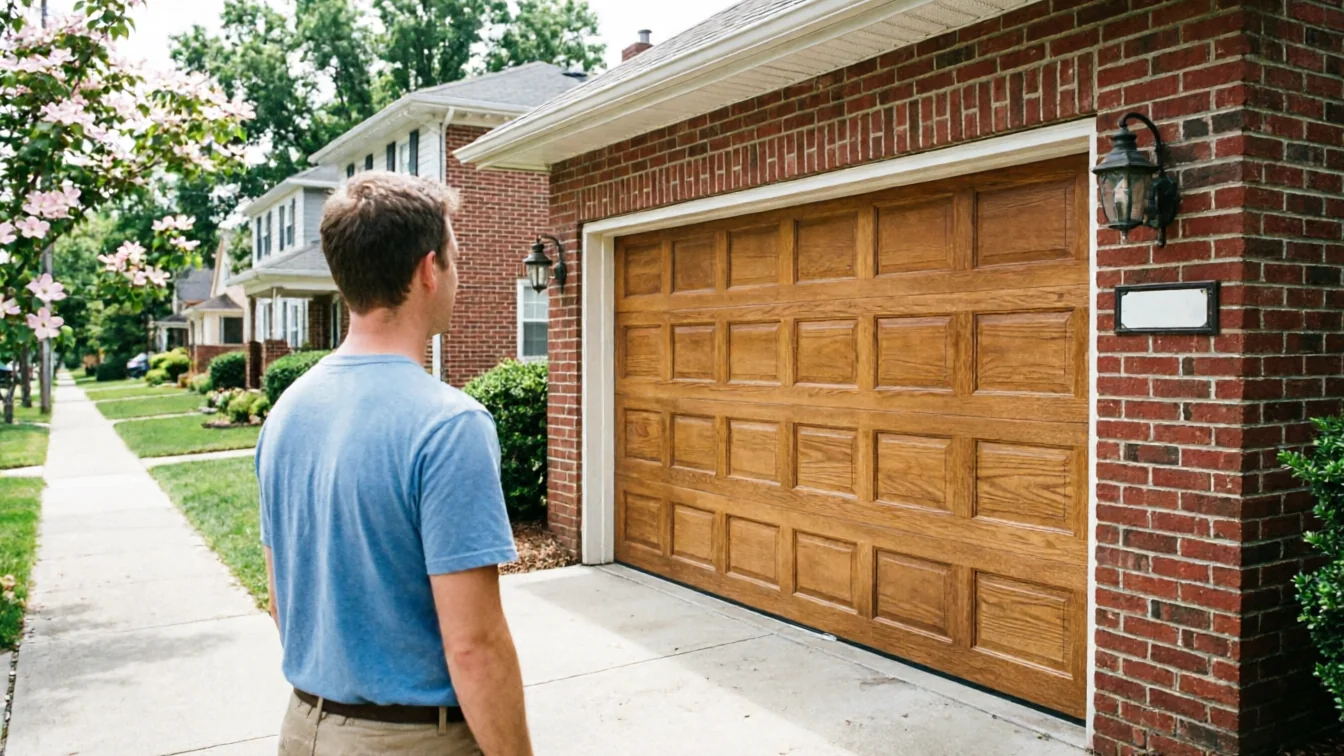
Silver Spring homes built 1948-2014 face cold winters and aging torsion hardware.
Read moreReady when you are
Silver Spring Garage Door Pros repairs and installs garage doors, springs and openers in Silver Spring, MD and the surrounding area.