Knowing When a Garage Door Repair in Silver Spring Isn't Worth It
Silver Spring's garage doors mostly date to the 1960s and 70s, built before current cold-climate codes.
Read moreSilver Spring's garage doors mostly date to the 1960s and 70s, built before current insulation rules, and our severe cold winters find every gap and worn spring in them.
Local detail
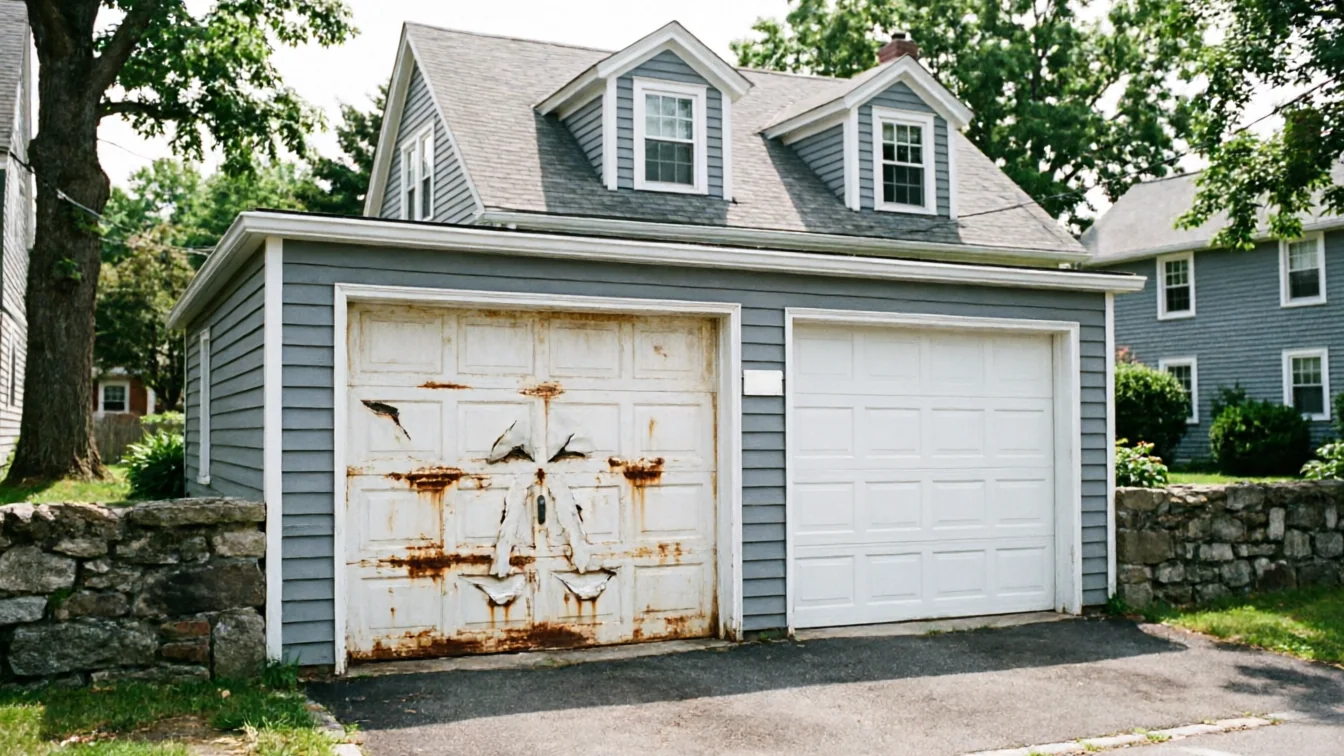
Silver Spring sits in a cold-climate zone with real winter severity, and that matters more here than in milder parts of the country because so much of the housing stock predates modern insulation standards. Homes in this service area were mostly built between 1948 and 2014, with the bulk going up in the 1960s and 70s - a stretch when garage doors were single-layer steel or wood, hung on hardware that was never designed to handle repeated freeze-thaw cycling. Cold makes steel contract and lubricant thicken, so torsion springs that were fine in October start binding and over-stressing by January. On doors from that era, the panels themselves can warp slightly where moisture gets behind the steel skin, since there's no vapor barrier to stop it. You'll notice it as a door that drags on one side in the cold, or a bottom panel that looks fine in summer and buckles slightly once temperatures drop. None of this is dramatic failure - it's slow fatigue, and it shows up fastest on doors built before insulation rules existed, because there's nothing inside the panel to buffer the swing.
The area
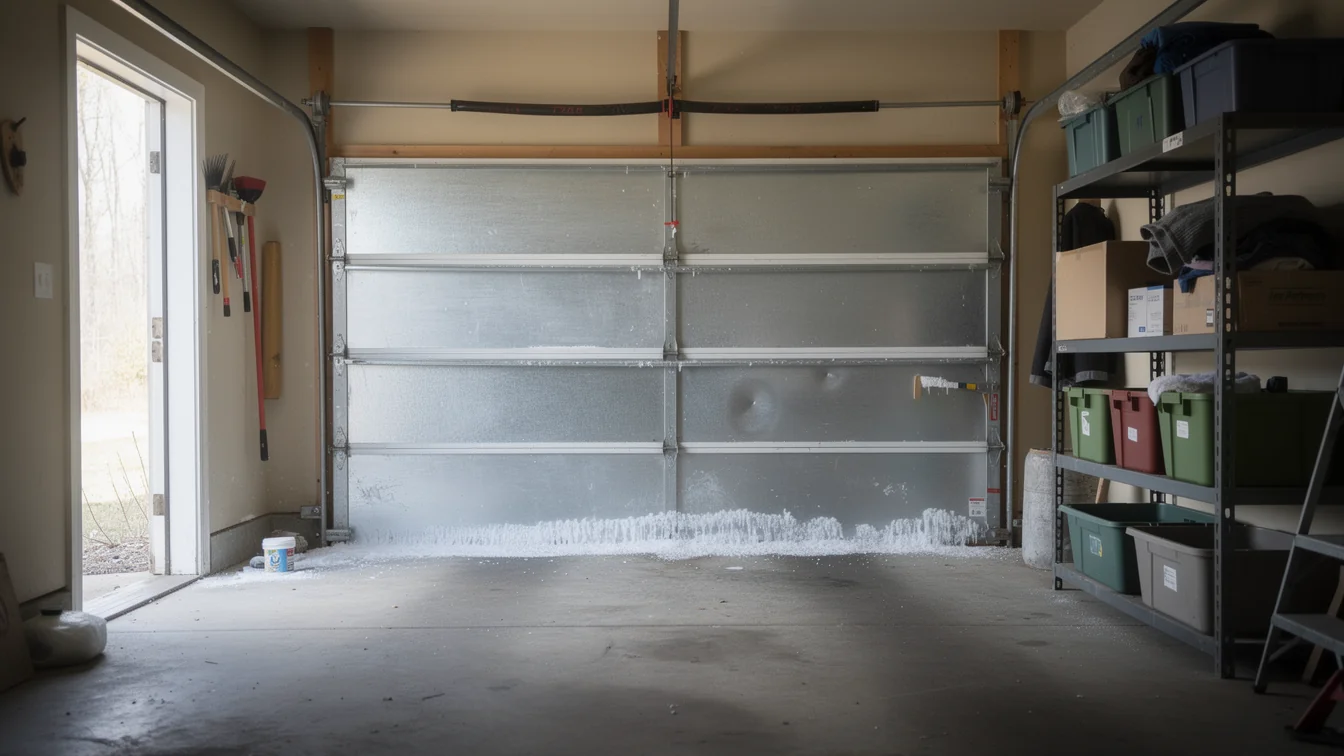
Start with the weatherstripping along the bottom and sides - on a door from the 1960s-70s stock common here, that strip has usually been replaced at least once already, and a cracked or flattened one lets cold air straight into the garage. Next, check the spring itself: on original one-piece or early sectional doors common to this era, listen for a grinding noise as the door travels, which usually means the spring is working harder than it should because the balance has shifted with age. Run a hand along a panel on a cold morning - if it's noticeably colder near the seams than the center, that's an uninsulated door losing heat exactly where you'd expect given its age. Check the track for ice buildup at the bottom rollers, since cold concrete floors in older Silver Spring garages often sit a few degrees colder than the slab was designed for, which lets moisture freeze there overnight. None of this requires tools, just fifteen minutes and good light.
What we find
The core issue is a mismatch: Silver Spring's winters are cold enough to stress a garage door system, but a large share of the doors still in service were installed when insulation and sealing weren't code requirements, not retrofits. A door built in 1976 - roughly the median build year for housing across this area - was engineered for a milder expectation of daily temperature swing than what it actually sees. Over decades, that shows up as spring fatigue, panel seam gaps, and hardware that's slightly out of alignment because the steel has expanded and contracted thousands of times more than a newer insulated door would. We won't tell you every old door needs replacing - plenty of 1960s and 70s doors are structurally sound and just need a spring swap or new weatherstripping. But if the panel itself is cracked or the insulation core (on doors that have one) has separated from the skin, patching it is a short-term fix at best, and we'll say so rather than charge you twice.
How we work
Fall is the window to deal with weatherstripping and lubrication before the cold sets in, since a dry track in October becomes a stuck track in December. Winter is when the severe cold actually tests the system - this is when springs under extra tension from age are most likely to snap, and it's the season we see the most no-heat garages with frozen tracks. Spring brings thaw and moisture; older uninsulated doors common to this housing stock often develop surface rust along the bottom panel edge during this stretch, where melting snow sits against steel that's been drying and wetting all winter. Summer is the easiest season mechanically, but it's also the best time to actually address an insulation or panel problem you noticed in January, since parts and scheduling aren't backed up by cold-weather emergency calls. If your door is original to a house built in that 1948-2014 range, don't wait for the next cold snap to find out which part gave up first.
Questions
Cold thickens lubricant and makes steel contract slightly, so a spring or roller that's already a little worn starts grinding more than it did in warmer months. On older doors common to this area, built before current insulation standards, the extra stress from temperature swings speeds up that wear year over year.
Sometimes - it depends on whether the panel and frame are still structurally sound. If the steel skin is cracked or separating, adding insulation won't fix the underlying problem. If the door is just an original uninsulated panel in good shape, a retrofit kit can help with the cold without full replacement.
Check it at least once before winter sets in. On houses with doors dating to the 1960s-70s stock typical of this area, the strip has often been replaced once already and may be due again - cracked or flattened weatherstripping is one of the most common cold-weather complaints we see.
Recommendation
More garage door guides for Silver Spring homeowners.
Silver Spring's garage doors mostly date to the 1960s and 70s, built before current cold-climate codes.
Read more
Silver Spring homes built 1948-2014 face cold winters and aging torsion hardware.
Read more
Silver Spring homes mostly date to the 1960s-70s, and cold-climate freeze-thaw cycles wear original hardware fast.
Read moreReady when you are
Silver Spring Garage Door Pros repairs and installs garage doors, springs and openers in Silver Spring, MD and the surrounding area.