
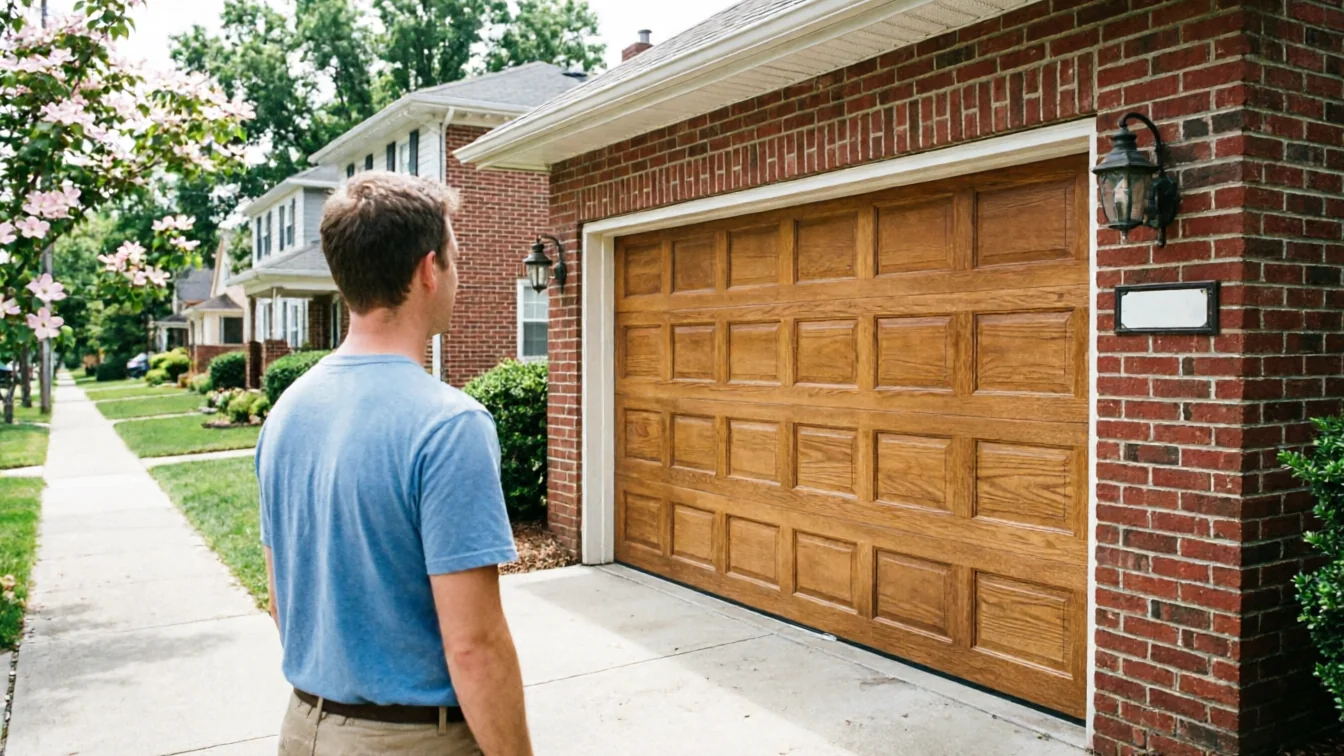
What a New Garage Door Needs to Handle in Silver Spring
Silver Spring homes built 1948-2014 face cold winters and aging torsion hardware.
Read moreSilver Spring homes built mostly in the 1960s-70s face cold-climate track wear. Here's what pulls a door off its rails and how to check it yourself.
Local detail
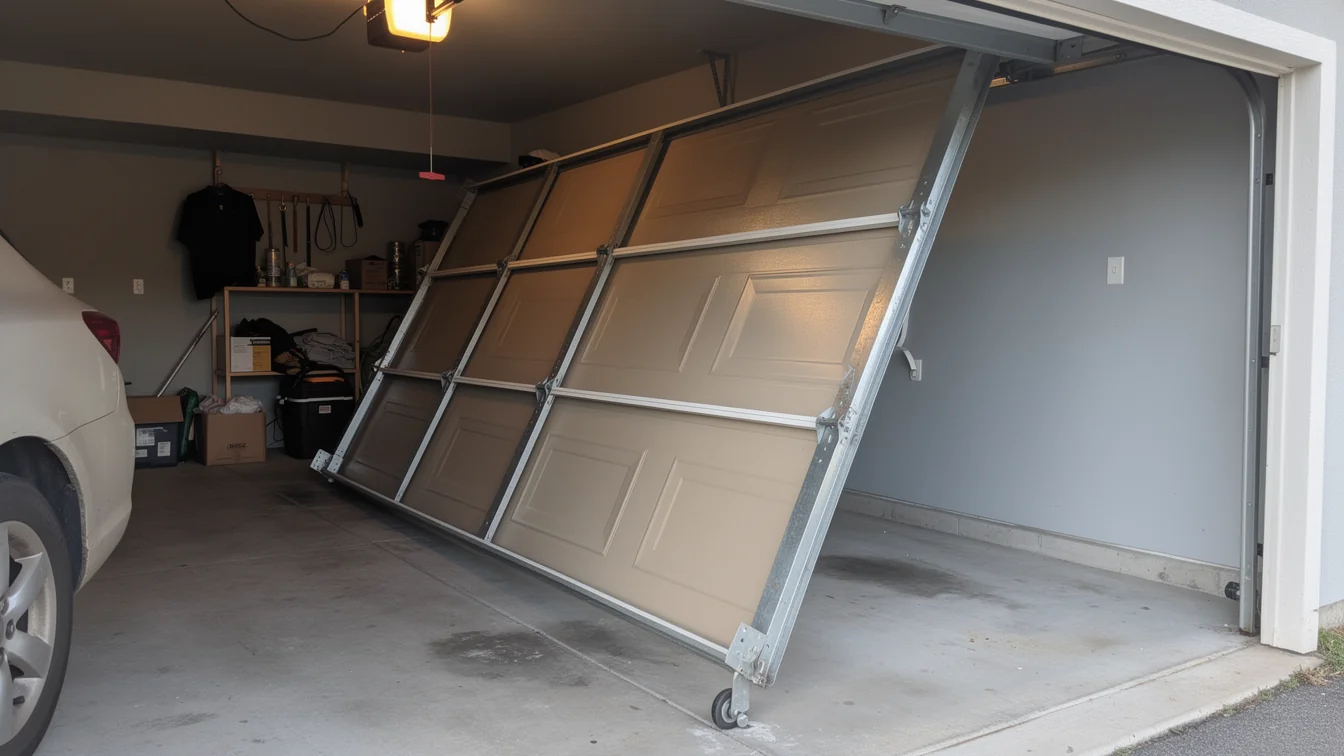
Silver Spring sits in a severe cold climate band, and that matters more to your track alignment than most homeowners realize. Tracks are bolted to a frame that moves. When temperatures swing hard through a winter, the wood framing around the opening shrinks and swells, and the track brackets anchored to it shift with it - sometimes by a sixteenth of an inch, sometimes more. That's enough to turn a straight vertical track into one with a slight bow partway up, and a bowed track is where rollers start climbing the lip instead of riding inside it. Add in ice that forms at the bottom of the track overnight and thaws by afternoon, and you get a cycle of expansion and contraction that no amount of lubricant fixes. Houses closer to Takoma Park and Forest Glen, both within a couple miles, see the same freeze-thaw pattern - this isn't a one-street problem, it's a regional one tied to how cold gets here and how fast it changes. If your door has started riding rough only in the last few cold months, the weather is the first thing to suspect, not the opener.
The area
Start at the bottom bracket, where the track meets the floor. On a severe-cold cycle, this is the spot that takes the most movement, and the bolts there back out slowly over years. Grab the track with both hands and pull - any wobble past a little give means the bracket needs re-anchoring before anything else. Next, look at the rollers themselves. Original rollers on homes from the 1960s and 70s stock common across Silver Spring's 81 named areas are often nylon on steel stems, and after decades of cold-season flex they develop flat spots. A flat-spotted roller doesn't roll, it skips, and skipping is what walks a door sideways out of the track. Last, sight down the track from the bottom looking up - any kink or gap wider than a credit card between roller and rail means the track itself has bent, not just loosened. None of this needs tools beyond a flashlight and a level. If you find wobble at the bracket and a visible kink in the same track, you're looking at a door that's close to coming off, not one that just needs a tightening.
What we find
Most of what pulls a door off track in this area traces back to the age of the house it's attached to. Housing here runs from 1948 to 2014 with a median build year of 1976, which means a large share of garages still have their original hardware - steel track sections sized and gauged to a 1970s-era door, not the heavier insulated doors a lot of owners have since swapped in. A heavier door on an old track puts more load on brackets that were never meant to carry it, and that mismatch shows up as slow sagging at the seams, then a jump off the rail under stress - usually a cold morning when the spring is already working harder than normal. I'll say plainly: if your track is original to a house built before the mid-1970s and you've replaced the door itself since, the track is very likely undersized for the new door's weight. Rehanging the old track isn't always the right fix. Sometimes the honest answer is a new track sized to the door you actually have, not the one the house came with.
How we work
Fall is when loose brackets first show themselves, because that's when temperatures start their steepest daily swing and the frame begins its seasonal shrink. Check bolts in October before the real cold sets in. Winter is when a marginal track fails outright - ice at the base, a stiff spring fighting harder than usual, and a roller that's already got a flat spot from last year's cold finally skips the rail. This is the season I get the most off-track calls across Silver Spring and the nearby stretch toward Wheaton and White Oak. Spring brings a different issue: as the frame swells back out, a track that was bowed inward during winter can suddenly bind rollers the other direction, which feels like the door is fighting you on the way up. Summer is the easy season - humidity swells wood a little more, but the big stress cycle is over until fall starts it again. If you're only going to inspect once a year, do it in October, before the cold starts moving your frame.
Questions
You can sometimes reseat a roller that's barely off the lip, with the door down and power to the opener disconnected. But if the track itself is bent or a bracket has pulled loose, forcing the door back on usually just moves the failure point somewhere else. A bent track section almost always needs replacing, not bending back.
Not always, but often, especially in winter. A spring that's already under extra tension from cold-stiffened cables puts more sideways load on the rollers right when the track is at its most misaligned from frame movement. If your door jumped track in December or January, I'd check the spring tension at the same time.
It's less about age and more about mismatch. A track original to a house built in the 1960s or 70s paired with a heavier replacement door is usually the real problem, not the track's calendar age. If the door's been swapped but the track hasn't, that's the detail that matters.
Recommendation
More garage door guides for Silver Spring homeowners.
Silver Spring homes built 1948-2014 face cold winters and aging torsion hardware.
Read more
Silver Spring homes mostly date to the 1960s-70s, and cold-climate freeze-thaw cycles wear original hardware fast.
Read more
Silver Spring homes built from 1948 to 2014 mix detached and attached garages, and this area's cold winters treat each differently.
Read moreReady when you are
Silver Spring Garage Door Pros repairs and installs garage doors, springs and openers in Silver Spring, MD and the surrounding area.