Is Your Silver Spring Garage Door Worth Fixing, or Done
Silver Spring homes mostly date 1948-2014, median 1976.
Read moreMost Silver Spring houses date to the 1960s and 70s, with original hardware still on many. Cold snaps are when torsion springs here finally let go.
Local detail
Silver Spring sits in a cold-severe climate band, and that matters more to a torsion spring than most homeowners think. Steel contracts as it gets cold, and a spring that's already fatigued from twenty, thirty, forty years of cycling loses what little flex it had left right when the temperature drops. You don't usually get a warning. The door goes up fine the night before, and in the morning the spring snaps on the first cold pull.
This isn't a coastal-climate problem - it's a cold-severe one, and it shows up every winter here. A spring under constant tension in a heated garage behaves differently than one in an attached but unheated bay, which describes a lot of the housing stock in this area. When the metal is already stiff from cold, the torque that used to ease the door open instead cracks the coil.
We see the pattern every year: a run of clear, cold days, then a string of calls about a door that won't budge or a loud bang from the garage overnight. That bang is the spring letting go, not the opener or the track.
The area
Look at the spring itself first - one or two coils mounted above the door, under tension, usually painted the same gray or black as the track. A gap in the coil, or one side sitting visibly looser than the other on a two-spring setup, means it's already gone or going.
Next, check the cables on either side of the door. If a spring breaks, the cable on that side often goes slack too, and the door will hang crooked if you try to force it by hand - don't. A door with a broken torsion spring can weigh more than most people expect, and the cable and track take the stress the spring used to carry.
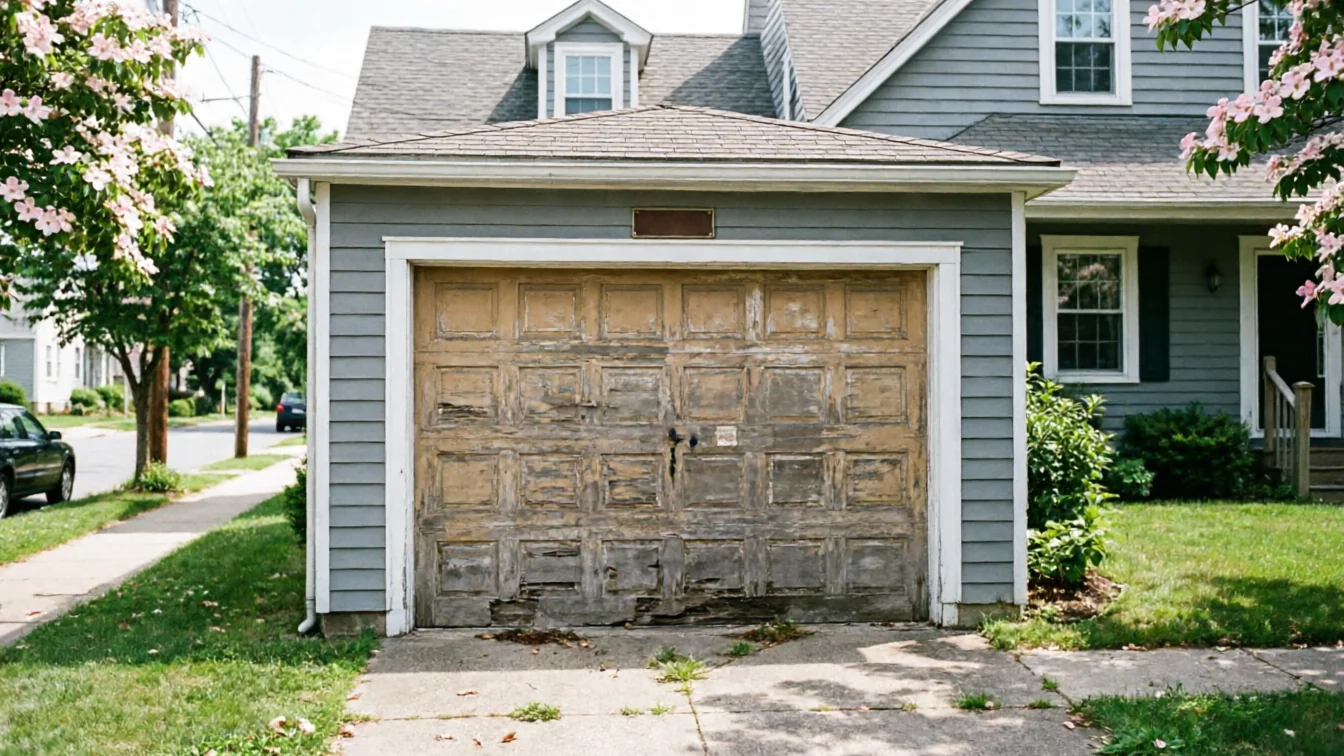
If your house falls into the older end of the local range - anything built before the 1970s median for this area - check whether the spring and hardware look original. A lot of homes around here still have the first spring ever installed, just because nobody's had a reason to replace it until it breaks.
One thing we won't do: tell you to lubricate a spring that's already cracked. Oil doesn't fix a fatigue fracture, and a spring in that state can let go while you're standing under it.
What we find
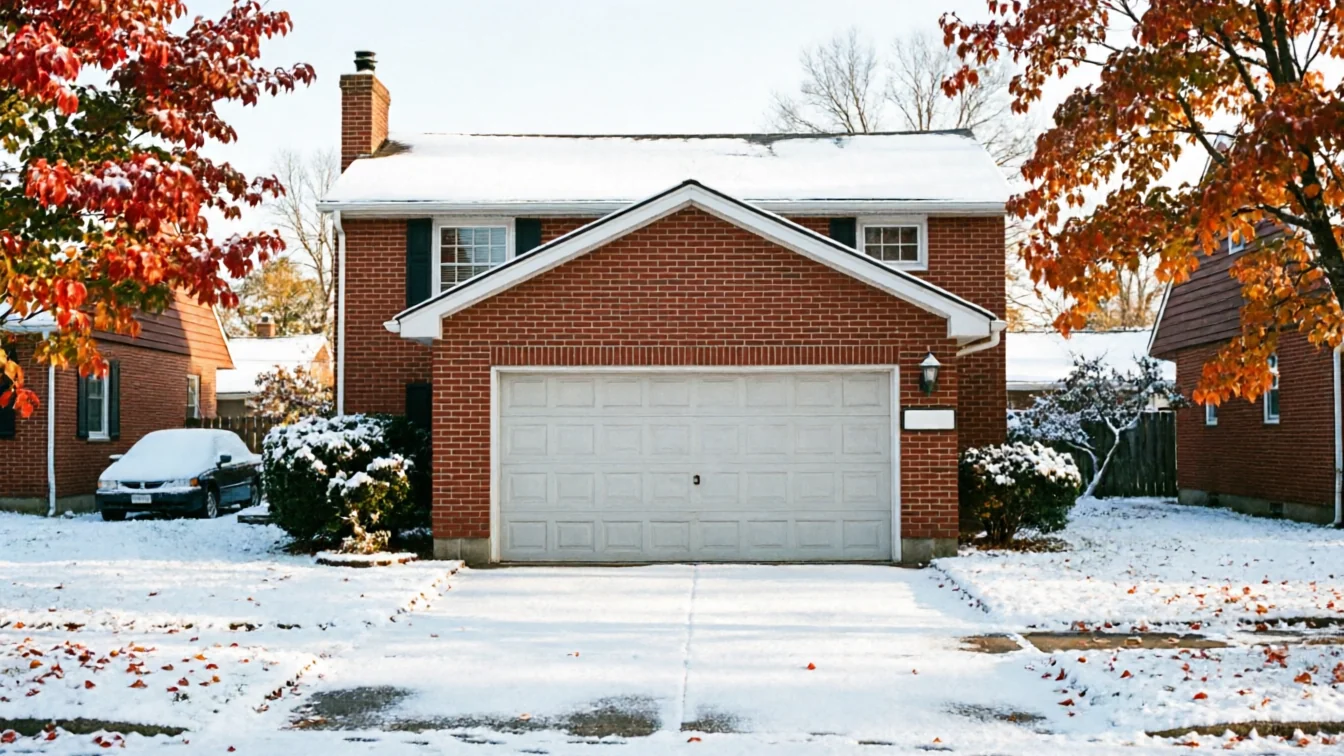
Housing in this area was built mostly between 1948 and 2014, with a median year of 1976, and most of the stock across the 81 named neighborhoods in the service area is 1960s-to-70s construction. That means a large share of garage doors and their original torsion hardware are now entering their fifth or sixth decade. Springs don't last that long under normal use, let alone decades of seasonal cold cycling.
The real issue isn't age alone - it's age plus the cold-severe climate band this area sits in. A spring rated for a certain number of cycles loses tension and flexibility faster when it's regularly working in freezing temperatures. Put a 1970s-era spring through forty-plus winters in a climate like this and the failure isn't surprising, it's overdue.
We can't tell you exactly when your spring will go. What we can tell you is that if your house is on the older side of that 1948-2014 range, and the spring hasn't been replaced, cold weather is the most likely trigger, not the coincidence.
How we work
Late fall is when we start fielding calls about doors that feel heavier than usual or make a new groan on the way up - early signs of a spring losing tension before it fully fails. Deep winter is when it actually breaks, almost always on a cold morning after a hard overnight freeze.
Spring and summer are quieter for spring failures specifically, but that's also the window to get an aging spring looked at before the next cold stretch finds it first. If your house is in that 1960s-70s band common across Forest Glen, Takoma Park, Kemp Mill, and the rest of this area, a spring that's never been replaced is on borrowed time regardless of season - cold weather just tends to collect on the debt.
We don't push a full spring replacement on every service call. If a spring still has life in it and the rest of the hardware is sound, we'll say so. Replacement makes sense when the coil shows wear or the door's age matches the house's original construction era and nothing's been touched since.
Questions
Steel stiffens as it gets cold, and a torsion spring that's already fatigued from years of cycling has little flexibility left to give. In this area's cold-severe climate, that final bit of give often disappears on the coldest mornings, which is why so many breaks happen right after a hard freeze rather than during a mild stretch.
If your house falls in the 1960s-70s range common across this area, and nobody's mentioned replacing the spring, there's a good chance it's original or close to it. Springs don't usually last five decades, so an original one is already well past typical service life.
Oil helps a spring that's still sound move more smoothly, but it does nothing for a coil that's already cracked or fatigued. If you can see a gap in the coil or the door hangs unevenly, lubricant won't fix it and the spring needs to come off.
Not always. One side can carry slightly more load or have more wear than the other, so cold weather often finds the weaker spring first. That's why a two-spring door can end up lopsided - one side still tensioned, the other gone.
Recommendation
More garage door guides for Silver Spring homeowners.
Silver Spring homes mostly date 1948-2014, median 1976.
Read more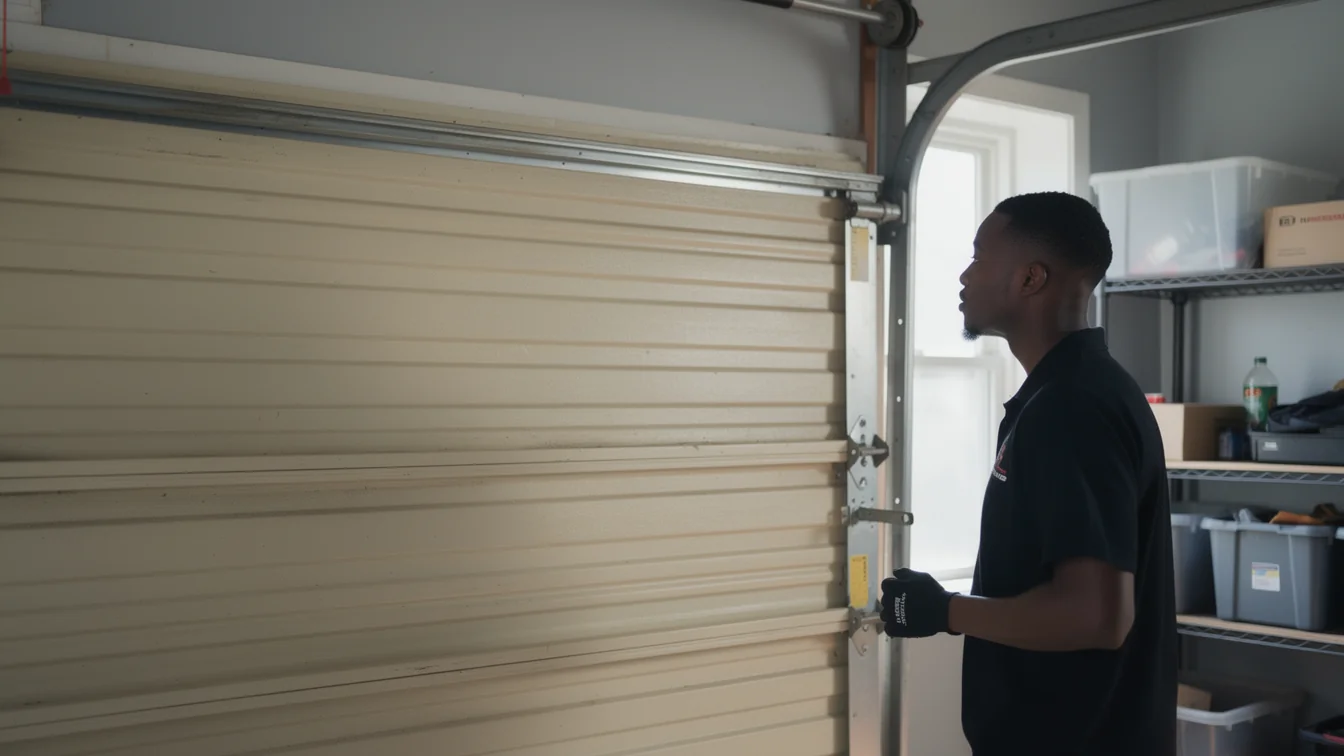
Silver Spring homes mostly date to the 1960s-70s, and cold-climate freeze-thaw cycles wear original hardware fast.
Read more
Most Silver Spring garage doors date to the 1960s-70s building boom.
Read moreReady when you are
Silver Spring Garage Door Pros repairs and installs garage doors, springs and openers in Silver Spring, MD and the surrounding area.